

LSZH vs FRLS vs HFFR Cable: Key Differences, Applications & Complete Comparison (2026 Guide)
A wrong cable choice during a fire can turn deadly within seconds.
In modern infrastructure, fire-resistant cables play a critical role in protecting lives, equipment, and property. Whether it’s residential buildings, industrial plants, metro systems, or data centers, selecting the right cable type is essential.
Among the most commonly used safety cables are LSZH, FRLS, and HFFR cables. While they may appear similar, they differ significantly in fire safety, smoke emission, toxicity, and applications.
This guide will help you clearly understand the difference and choose the right cable for your needs.
What is LSZH Cable?
LSZH (Low Smoke Zero Halogen) cables emit minimal smoke and zero toxic gases during fire.
These cables are widely used in environments where human safety and evacuation visibility are critical.
- Zero halogen emission
- Very low smoke density
- High fire safety
- Environment-friendly
- Ideal for enclosed spaces
What are FRLS Cables?
FRLS (Flame Retardant Low Smoke) cables are designed to reduce flame spread and emit lower smoke compared to standard PVC cables.
- Flame retardant
- Moderate smoke emission
- Cost-effective
- Suitable for general wiring
- Widely used in residential and commercial applications
What is HFFR Cable?
HFFR (Halogen Free Flame Retardant) cables are designed to be completely halogen-free while offering strong flame resistance.
They are often considered a safer alternative to FRLS cables and are sometimes used interchangeably with LSZH in certain applications.
- Halogen-free composition
- Flame retardant properties
- Safer than FRLS cables
- Used in industrial critical environment
- Lower toxicity during fire
LSZH vs FRLS vs HFFR (Comparison)
| Feature | LSZH | FRLS | HFFR |
|---|---|---|---|
| Halogen Content | None | Present | None |
| Smoke Emission | Very Low | Medium | Low |
| Toxic Gas | None | Yes | None |
| Fire Safety | Very High | Moderate | High |
| Applications | Metro, Hospitals | Homes, Offices | Industrial, Commercial |
Applications
LSZH: Metro rail system, Hospitals, Data centers, High-rise buildings
FRLS: Residential wiring, Office buildings, General electrical installations
HFFR: Industrial plants, Commercial complexes, Critical infrastructure, Environments with high fire risk
Which Cable Should You Choose?
Choosing the right cable depends on safety requirements, budget, and application:
- For maximum safety in public spaces, LSZH is the best choice.
- For cost-effective solutions in low-risk environments, FRLS may suffice.
- For industrial applications with high fire risk, HFFR offers a good balance of safety and performance.
Importance of Cable Compounds
The performance of any cable depends heavily on the quality of the compound used.
High-quality compounds ensure that cables meet fire safety standards, have low smoke emission, and maintain durability under extreme conditions.
About Takkar Polychem
Takkar Polychem is a trusted manufacturer of high-performance cable compounds, including:
- LSZH/ZHFR Compounds
- FRLS PVC Compounds
- Advanced cable insulation materials
The company provides safe, reliable, and industry-compliant solutions for wire and cable manufacturers.
Conclusion
Understanding the difference between LSZH, FRLS, and HFFR cables is crucial for selecting the right solution for safety and performance.
As safety standards evolve, halogen-free cables such as LSZH and HFFR are becoming the preferred choice across industries.
For high-quality cable compounds and expert guidance, Takkar Polychem provides reliable solutions tailored to industry needs.
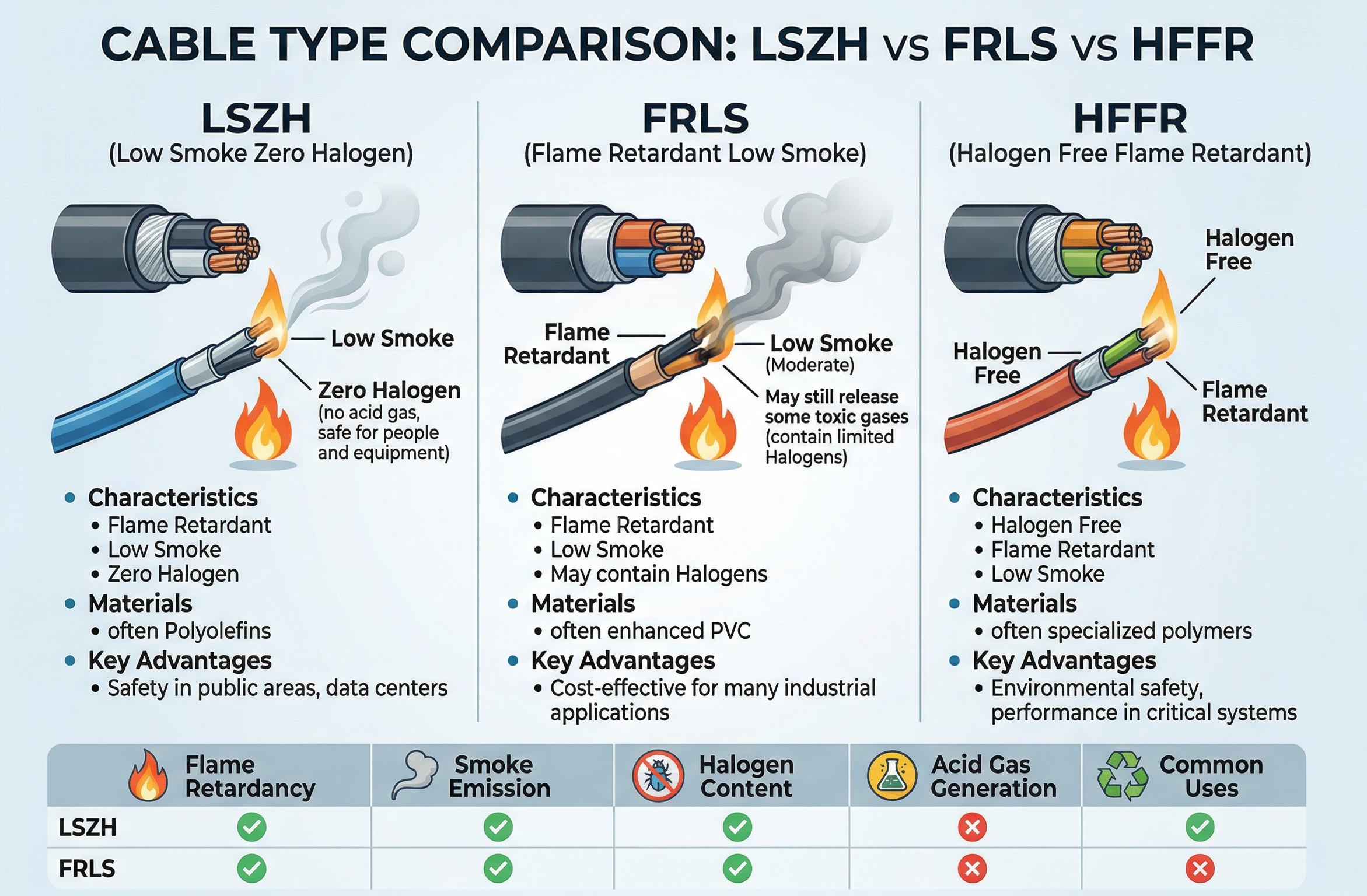
LSZH vs FRLS vs HFFR Cable: Complete Comparison Guide
Leave a Reply
Your email address will not be published. Required fields are marked *